How USC Annenberg and Advanced Systems Group Built a Software-Defined Media Center for the Next Generation of Media Professionals
At USC Annenberg School for Communication and Journalism, the software-defined media center is anything but theoretical. Every semester, hundreds of students rotate through creating live newscasts, interviews, podcasts, and streams, producing real content for real audiences under real deadlines. It’s one of the largest student-driven newsrooms in the country, and it operates at full speed.
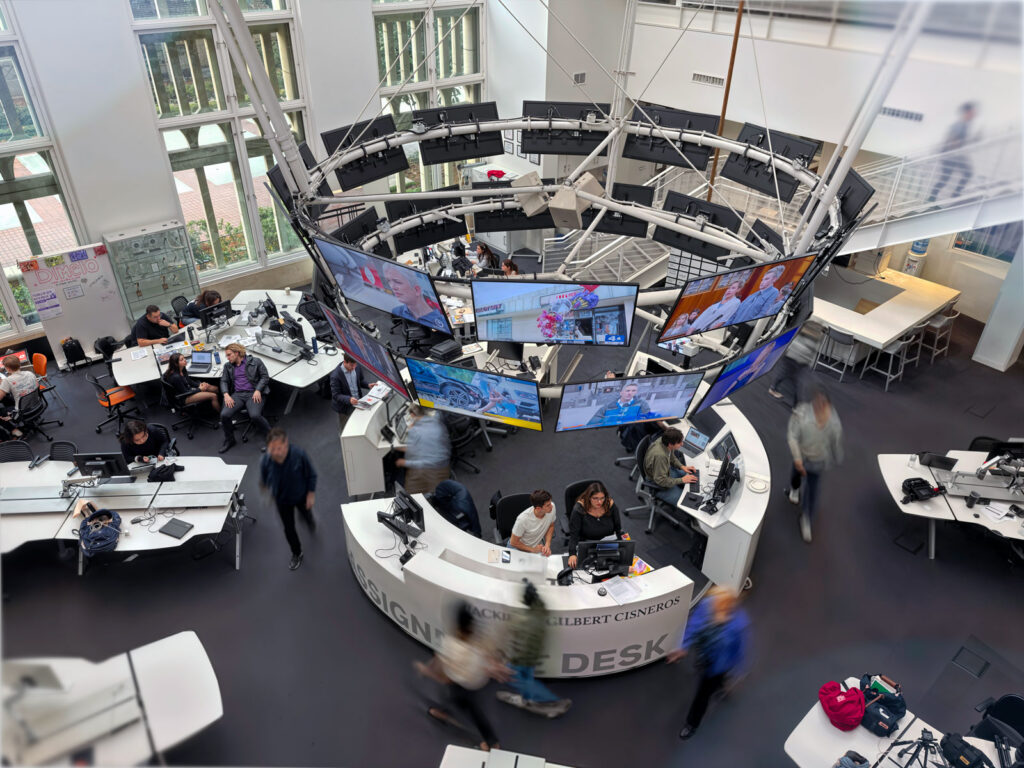
USC Annenberg School for Communication and Journalism - Media Center Assignment Desk
Teaching Journalism Without Letting Technology Get in the Way
By 2023, the pace of production had begun to reveal areas for improvement. “Our students are here to learn journalism,” says Charles Bailey Peyton, MS, Chief Information Officer at USC Annenberg. “And at a certain point, the technology was requiring more attention than it should.” As the volume of production increased, so did the number of moving parts behind the scenes. Supporting those workflows took more hands and more coordination, just as expectations for what students could produce continued to rise. USC didn’t need another incremental upgrade. They needed to rethink how the newsroom and studios would work in the future. USC needed a more flexible, software-defined media center built on an IT-driven foundation that could reduce technical friction, support changing curriculum needs, and evolve over time.
That rethink became a multi-year collaboration with Advanced Systems Group (ASG), focused not simply on refreshing equipment, but on reshaping how a teaching newsroom could operate and prepare students in a software-driven world. Pairing software-defined innovation with a modernized professional broadcast foundation became the key, and what emerged wasn’t just a studio upgrade. It was a move toward infrastructure built more like modern IT than traditional broadcast – built on software, networks, and systems that could change over time.
Starting With How Students Actually Work
ASG had partnered with USC Annenberg for many years, including the original design of the Annenberg facility. Over that time, both the technology and the program evolved, but the goal remained consistent: create an environment where students could focus on journalism while working with tools that reflected the industry around them.
When it came time for this next phase, the conversation didn’t begin with equipment lists or studio layouts. Instead, USC framed the discussion around longevity. What mattered wasn’t just how the studios worked today, but how production could continue supporting the curriculum as it evolved, semester after semester, year after year. From there, the team mapped practical outcomes: what students needed to be able to do and how quickly studios needed to turn over.
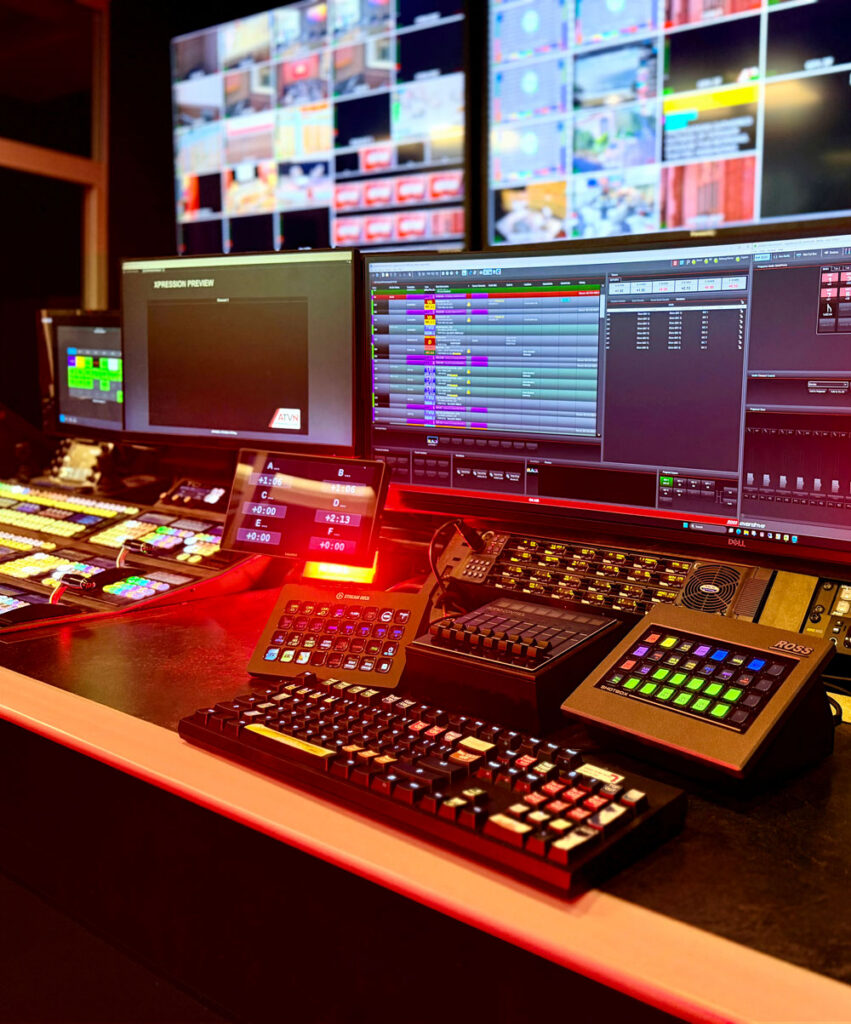
Studio C Control Room
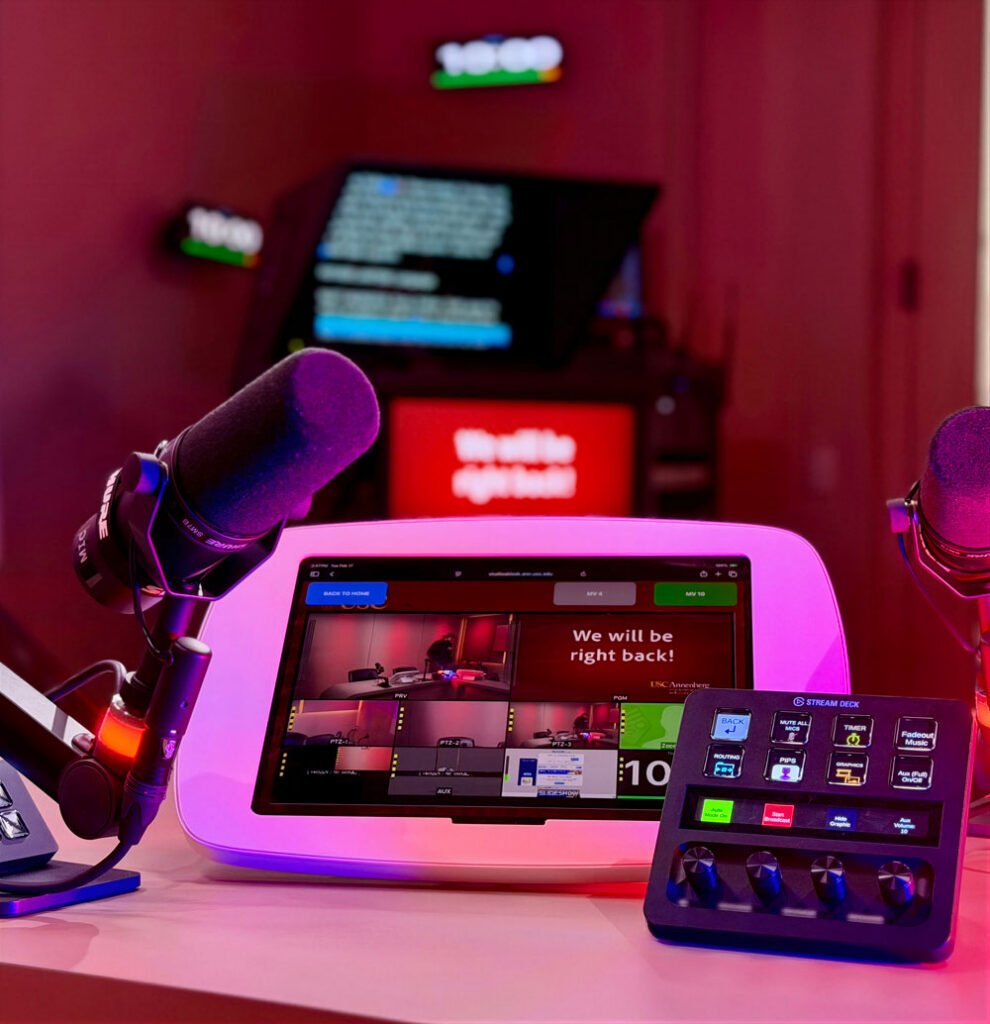
Studio A Kiosk and Stream Deck
USC documented hundreds of real-world scenarios, for instance: a student walking in alone to record an interview, a two-person podcast with graphics, a short livestream between classes, and a fast asset turnaround for coursework. Those user stories became the blueprint.
“Charles and his team came in with a really clear understanding of what students needed to be able to do,” says Steve Young, Senior Principal Consultant at Advanced Systems Group. “That level of input guided the outcome. When you start with real use cases, you end up with a system that actually fits how people work.”
Innovation Takes the Lead
The transformative part of the project touched all three USC studios, but especially in Studios A and B. These spaces needed to be intuitive enough for first-time users, fast enough to reset every 30 minutes, and powerful enough to deliver professional results, without constant staff support.
With Claudia Souza, Chief Innovation Officer at ASG, leading the team, they began exploring a more software-defined approach to production – one that asked a different question: Could a professional studio deliver high production value without asking students to think like broadcast engineers? Instead of requiring users to operate switchers, audio consoles, and routing panels, the team explored whether those systems could work quietly in the background. Camera switching, audio mixing, lighting, routing, and graphics would be orchestrated programmatically, triggered by a small number of intentional choices made by the user.
Today, from the student’s perspective, it feels simple: walk in, log in, choose how you want to produce, record or stream, and leave with assets ready to use. A compact, app-like control surface replaces rows of hardware panels. Pre-built production “looks” allow students to trigger polished layouts (two-boxes, over-the-shoulder graphics, lower thirds) with just a few button presses.
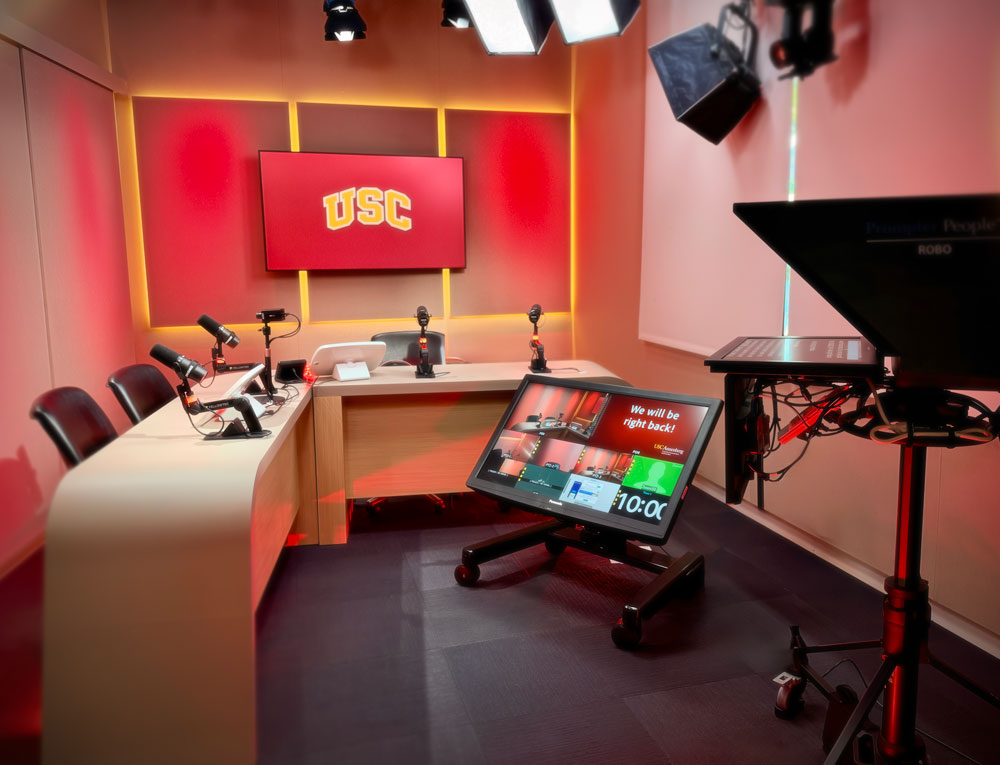
Studio A
The complexity of the technology didn’t disappear. It moved into the software layer. “The goal wasn’t to simplify production,” says Claudia Souza. “It was to remove the friction that keeps people from creating. When the system takes care of the mechanics, students can focus on the story, and that’s where real creativity shows up.”
Behind the scenes, the system (including tens of thousands of lines of custom code) translates student projects into coordinated actions across cameras, audio, lighting, routing, and graphics systems using vendor APIs. What students experience as ease of use is the result of careful orchestration and design.
Making Innovation Work in the Real World
Designing a new way to work was only part of the challenge. Delivering it across three studios, within narrow summer shutdown windows, and without disrupting an active academic program required discipline and coordination.
As the vision took shape, responsibility shifted toward execution: sequencing construction, scenic work, infrastructure upgrades, systems integration, commissioning, and training into a schedule with little room for delays. That effort was led by ASG’s systems integration team under Michele Ferreira, Vice President of Systems Integration, guiding the project from design through delivery. Her team coordinated across ASG’s Consulting and Innovation groups, vendor engineering teams, and the USC team.
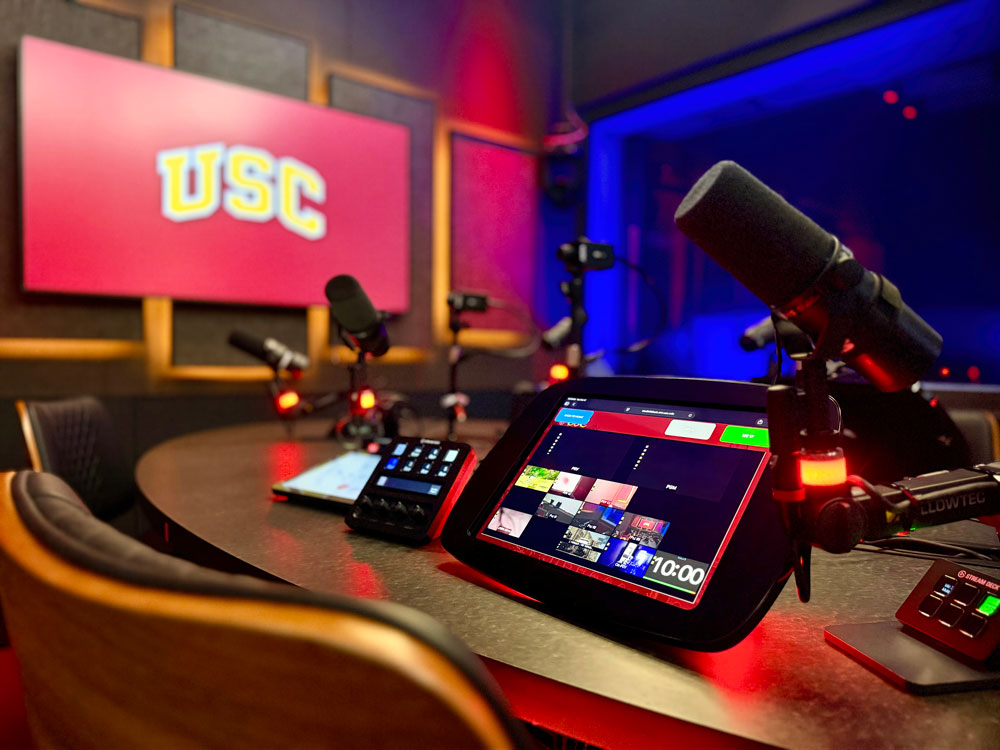
Studio B
To make the timeline work, ASG assumed responsibility not only for technology integration but also for preparing the spaces themselves; coordinating scenic elements, furniture, electrical work, and physical readiness before systems could be powered on. It was the kind of work students never see but immediately benefit from. “The innovation was exciting,” says Michele Ferreira, “but making it work inside an active academic environment was incredibly challenging. We had to align design, construction, integration, and training into very narrow windows and still deliver something students could rely on the first day back to class.”
Designed for Journalism, Not Engineering
For USC Annenberg, the value of the software-defined approach wasn’t just operational; it was philosophical. Students aren’t there to master hardware. They’re there to learn how to tell stories, conduct interviews, and work confidently under pressure. “We didn’t want the technology to dictate our curriculum,” Peyton explains. “But we did want it to guide us toward what’s next.”
The infrastructure now behaves more like modern IT than legacy broadcast, built on servers, networks, and software layers that can change over time. That matters in a teaching environment, where technology and curriculum rarely stand still at the same pace.
Before the upgrade, scaling production meant scaling support. Today, the balance has shifted. “Our support hours are way down,” Peyton adds. “But student output is way up.”
Studio C: Anchoring Broadcast Production
While Studios A and B pushed into new territory, Studio C was modernized to anchor the facility in today’s traditional professional broadcast workflows. The kind students will still encounter in real-world newsrooms.
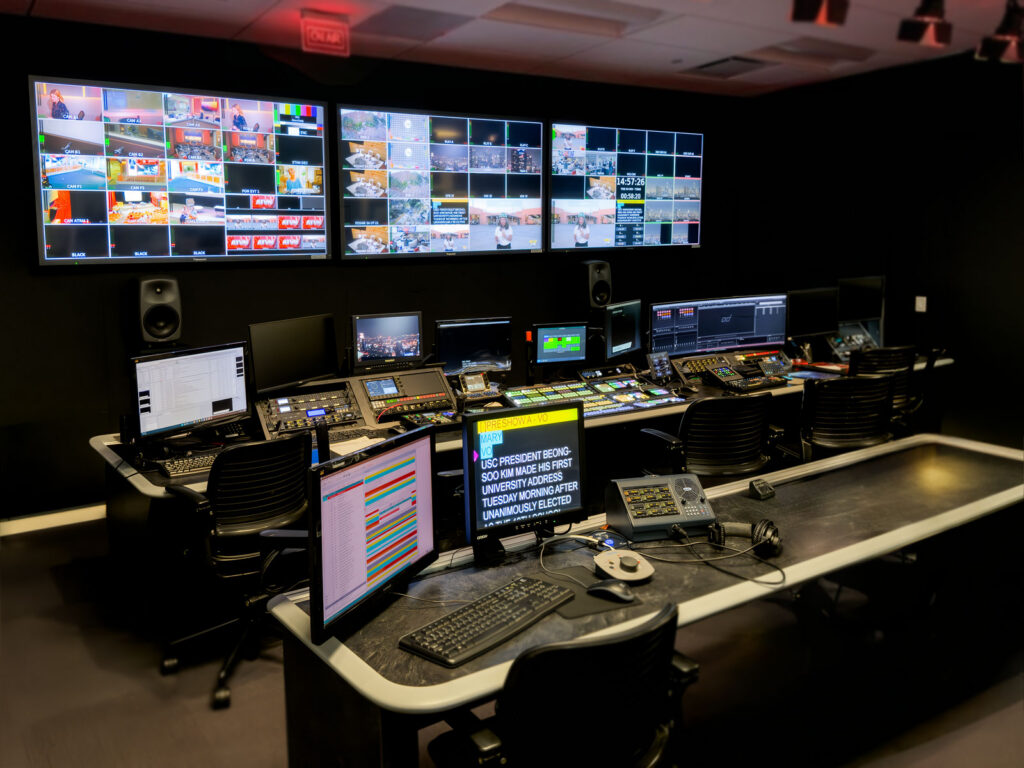
Studio C Control Room
Studio C serves as USC Annenberg’s primary broadcast studio, supporting daily newscasts, flagship programs, and live streams. ASG rebuilt the studio around a cohesive Ross Video news ecosystem, creating a stable, integrated foundation for live production.
The upgrade included refreshed cameras, a large video wall backdrop, updated scenic design, and tighter integration across switching, graphics, routing, monitoring, and playout. The control-room-based workflow remains central, giving students hands-on experience with how professional live production is structured and executed.

Server Room
At the same time, Studio C doesn’t exist in isolation. All three studios are fully interconnected via an IP backbone to create a single and unified environment. Content can move freely between spaces, and Studios A and B can even function as insert studios for Studio C, blending software-defined agility with traditional broadcast production.
All content created across the studios ultimately feeds into a centralized Qumulo clustered data storage environment, upgraded by ASG to support the program’s growing production demands. Designed for high-performance media workflows, the system gives students and faculty immediate access to shared assets while ensuring projects can move smoothly from recording to editing to delivery.
Automation Changed Everything
The biggest change at USC Annenberg wasn’t technical. It was how students felt walking into the room. Once students stopped worrying about how the system worked, they started focusing on what they wanted to create.
Automation didn’t make the studios feel more constrained. It did the opposite. By removing the need for three or four people just to try an idea, the system permitted students to experiment. They could walk in, test something new, and iterate without fear of breaking anything or needing an expert standing behind them.

Studio C News Set
The systems behind the scenes are the same class of professional tools used in real newsrooms. Assembled in a way that takes complexity out of the way, it allows people to create. Students don’t see the automation layer coordinating cameras, audio, graphics, and routing. What they experience is the ability to create professional-looking content without fighting the tools meant to support them.
A Platform, Not a One-Time Build
To support the studios over time, ASG also provides ongoing managed services, with embedded technical staff working alongside USC’s team. These broadcast and IT specialists support students day to day, help resolve issues quickly, and make adjustments as workflows need to evolve. “A really great example of managed services is that it’s a continuation of ASG’s commitment to the success of Annenberg students,” says Gretchen Taipale, Vice President of Managed Services at ASG. “Our embedded team is there every day supporting systems and students, while helping the system grow with the program.”
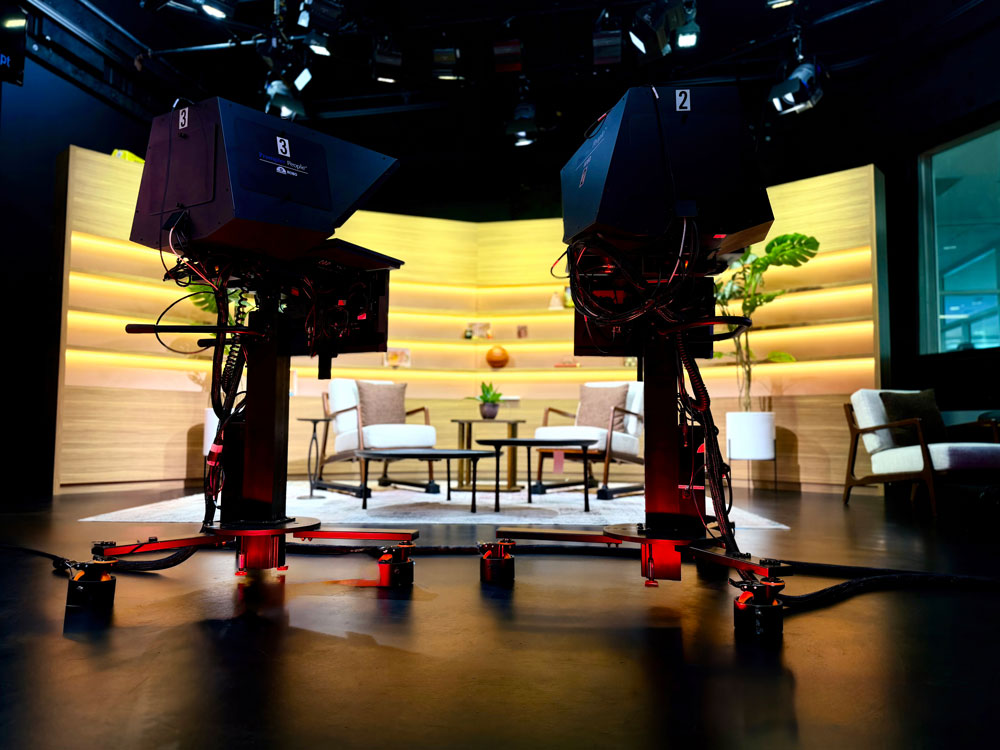
Studio C Set
That ongoing presence helps USC Annenberg refine the environment without disruption, ensuring the technology continues to support learning.
The facility is no longer a fixed design. It’s a living platform that USC can keep shaping as journalism and technology evolve. Its real measure of success is simple: a media center that stays out of the spotlight, so students and stories can take center stage.
For Further Reading check out how ASG helped PAC 12 Networks design and build new broadcast and production studios, ready for over 850 live events per month. All in a 12 month time-frame: Pac-12 Networks’ New Studio by ASG.
Ready to discuss your next project?
Get a PDF of this ASG Customer Story
Related Articles
iBelieveInSwordfish Motion Design and ASG Build the Infrastructure for 24K Immersive Art
Read More
Read More
ASG’s Systems Integration for the SAG-AFTRA Foundation’s Meryl Streep Center
Read More