What Enterprise Video Leaders Say About the Shift to Vertical-First Production
How mobile-first audiences are reshaping corporate video workflows—and what production teams need to do about it.
Watch the full panel discussion from Silicon Valley Video Summer Camp
For decades, corporate video followed a familiar playbook. Productions were designed primarily for conference room displays, corporate websites, broadcast screens, and YouTube. The 16:9 widescreen format became the standard, influencing everything from studio layouts and camera framing to lighting, graphics, and post-production workflows.
Today, that assumption no longer holds true.
Executive communications, product launches, employee updates, customer stories, recruiting videos, and thought leadership content are increasingly consumed on smartphones. Audiences expect content that feels native to the platform they’re using—whether that’s LinkedIn, YouTube Shorts, Instagram Reels, TikTok, or an internal communications platform.
The shift isn’t simply about producing vertical video.
It’s about rethinking how content is planned, produced, and delivered.
That evolution was the focus of “The Producer’s Challenge: Producing for a Vertical-First Corporate Culture,” presented at Silicon Valley Video Summer Camp, where industry leaders discussed how production and engineering teams are adapting to changing audience expectations.
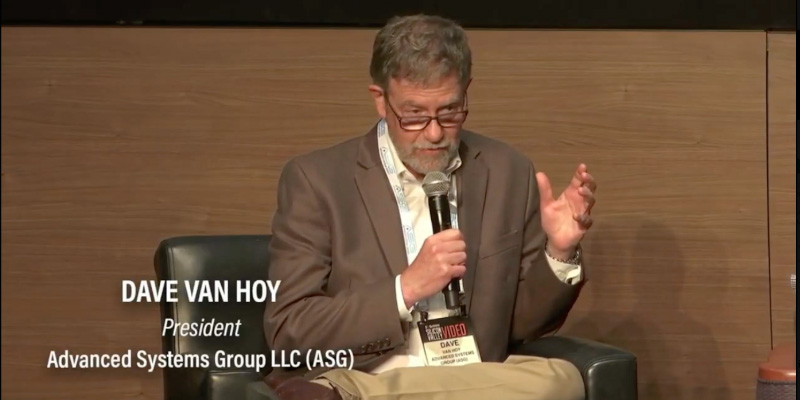
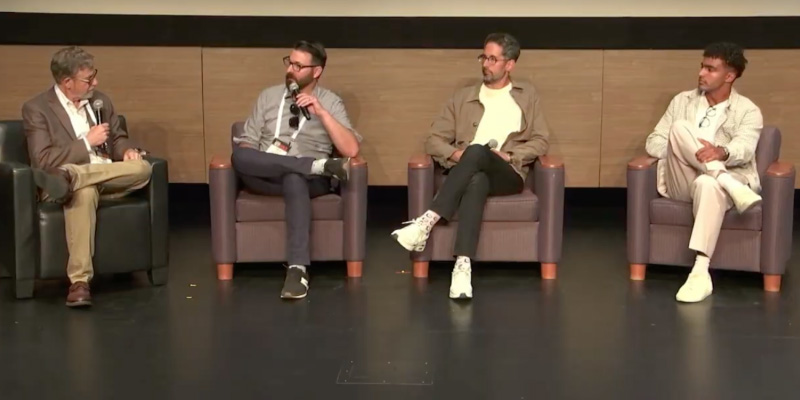
Moderated by Dave Van Hoy, President of Advanced Systems Group (ASG), the panel featured:
- Dave Cherry, Creative Director, Brand Video, ServiceNow
- Marc Teixidor, Senior Technical Production Manager, Twitch
- Casey Traina, Co-Founder & CTO, Overlap
Together, they explored how organizations are bridging the gap between traditional cinematic production and today’s mobile-first, “snackable” content while maintaining the production quality and operational efficiency enterprise organizations require.
The Audience Has Changed—Production Must Change Too
Corporate storytelling has evolved dramatically over the past several years.
A CEO announcement may appear simultaneously on an employee portal, LinkedIn, YouTube, Instagram, and internal collaboration platforms. Customers might watch a product announcement on a phone during their commute, while employees catch up on company updates between meetings.
Content now lives everywhere.
That means producers can no longer assume a single viewing experience.
Instead, organizations are increasingly designing productions that support multiple formats from the very beginning rather than treating vertical video as something to create after the primary edit is complete.
The discussion made it clear that success isn’t measured by producing one polished video. It’s measured by building a content strategy capable of serving audiences wherever they choose to consume media.
Vertical-First Starts Long Before the Camera Rolls
One of the biggest misconceptions surrounding vertical content is that it’s simply a matter of cropping a widescreen video after production.
Modern production teams know that’s rarely the case.
Planning for both horizontal and vertical delivery influences nearly every creative and technical decision, including:
- Camera framing
- Lens selection
- Graphics and motion design
- Talent positioning
- Lighting design
- Studio layouts
- Production workflows
- Recording strategies
When these considerations become part of pre-production planning, organizations can create content that feels intentional across every platform while avoiding unnecessary rework during post-production.
One Production Day Should Power an Entire Content Strategy
Today’s production teams are expected to create significantly more content than they did just a few years ago.
At the same time, budgets and staffing often remain unchanged.
The answer isn’t necessarily producing more.
It’s producing smarter.
A thoughtfully planned production can generate an entire library of content, including:
- Executive communications
- Customer stories
- Product announcements
- Website videos
- LinkedIn content
- YouTube videos
- Short-form vertical clips
- Internal communications
- Promotional teasers
By planning multiple deliverables before production begins, organizations maximize the value of every shoot while maintaining consistent messaging across every platform.
Production and Engineering Are More Connected Than Ever
Another important theme throughout the conversation was the growing partnership between creative and technical teams.
Supporting both 16:9 and 9:16 production isn’t simply an editing challenge.
Studios, camera systems, lighting, graphics workflows, recording infrastructure, teleprompters, storage, and media management all influence how efficiently content can be created and repurposed.
Organizations that bring engineering into the planning process earlier are better positioned to build flexible workflows that support evolving production requirements without increasing complexity.
The result is faster production, greater consistency, and better long-term scalability.
The Modern Studio Must Support Every Kind of Story
The traditional purpose-built studio is evolving.
Today’s enterprise production environments often need to accommodate executive messaging in the morning, a customer interview in the afternoon, a podcast later in the day, and a live stream the following week.
Rather than building dedicated spaces for individual use cases, organizations are investing in adaptable production environments capable of supporting a wide range of content with minimal reconfiguration.
This flexibility allows creative teams to respond quickly to changing business priorities while maintaining consistent production quality and brand standards.
The Bigger Opportunity Isn’t Vertical Video—It’s Workflow
While much of the industry conversation focuses on aspect ratios, the panel highlighted a larger transformation taking place across enterprise production.
Organizations aren’t replacing traditional 16:9 production.
They’re expanding beyond it.
Both horizontal and vertical formats serve important purposes, and successful organizations are developing workflows that support both without duplicating effort.
The companies that thrive won’t simply create more video.
They’ll build production ecosystems that enable content to move efficiently from concept to delivery—regardless of where audiences choose to watch.
Final Thoughts
As enterprise communications continue to evolve, production teams face a fundamental challenge: creating more content, for more platforms, with the same commitment to quality and efficiency.
The discussion at Silicon Valley Video Summer Camp reinforced that solving this challenge requires more than new cameras or editing tools. It requires new ways of planning, collaborating, and designing production workflows.
For organizations looking to future-proof their content strategies, the shift to vertical-first isn’t about abandoning traditional production—it’s about building flexible workflows that support every audience, every platform, and every story.
About the Panel
The Producer’s Challenge: Producing for a Vertical-First Corporate Culture was presented on July 14, 2026, during Silicon Valley Video Summer Camp, a premier event bringing together leaders in media technology, production, and enterprise communications.
The session explored how executive communication is shifting toward mobile-first, “snackable” content and examined the technical and creative challenges of bridging traditional 16:9 cinematic production with the rapidly growing demand for 9:16 vertical video.
Watch the full discussion above to hear their perspectives on the future of enterprise video production.
Looking to modernize your organization’s video production strategy? Scale your production team?
The experts at Advanced Systems Group help organizations design scalable production environments, optimize media workflows, and build flexible content creation teams for today’s evolving communications landscape.
Related Articles
Advanced Systems Group Appoints Eran Binyamin Zeitoun as Senior Technical Program Manager
Read More
Scaling Live Production Without Scaling Complexity
Read More
Read More